
FIVE STONES. ONE CLEVER LINE.
Gomoku for two. One board, big plans.
An empty wooden board, two colors and a plan that changes with every move. Sit together and see who can connect five first.
- One shared screenTake turns together
- 15 × 15 intersectionsRoom for your next idea
- Black moves firstWhite makes the reply
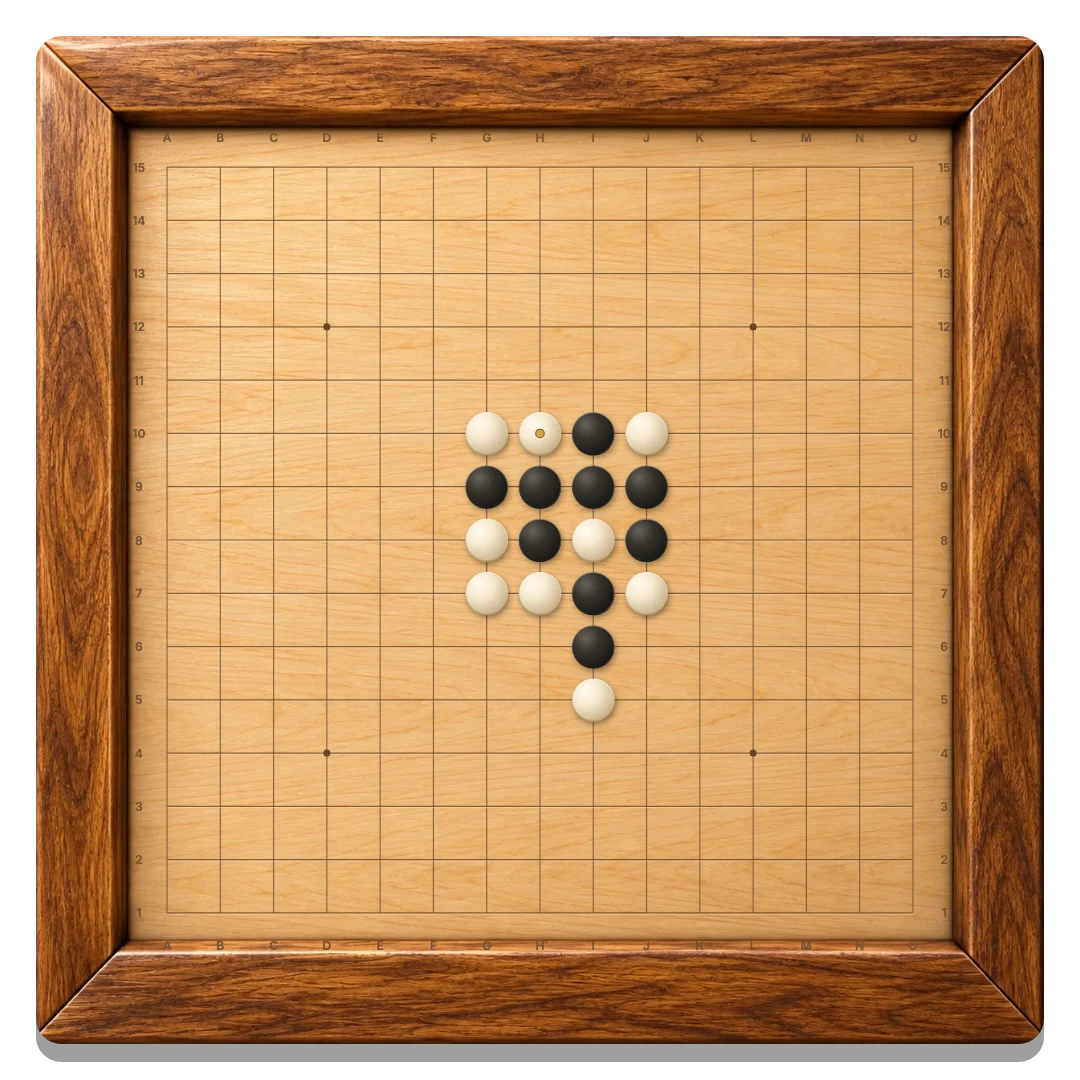
Tap an empty intersection to place a stone.
Build lines in four directions and watch for a second threat.
Local rounds save in this browser when storage is available.
Start a game on the same device
- Open the board. Play Gomoku 2 Player starts Same device mode, restoring your local round if you have one.
- Choose your colors. Player 1 has Black and moves first. Player 2 has White.
- Take turns placing stones. Click or tap where two grid lines cross. Each turn adds one stone.
- Make five in a row. Horizontal, vertical and both diagonal directions count.
The whole position is visible to both players. No hidden hand or pass-the-device screen is needed.
Small rules, a spacious board
The 15 × 15 board offers 225 intersections. Stones go on the line crossings, not inside the squares. Once placed, a stone stays there for the rest of the round. You cannot move, capture or replace a stone.
This version uses freestyle Gomoku: an uninterrupted line of five or more stones wins. There are no forbidden moves, opening restrictions or color swaps. A filled board without a winning line is a draw. See the complete rules.
Look in more than one direction
A stone near the center can join several future lines. Build two or three stones with space at both ends, then look at how your opponent can interrupt them.
Before making each move, check for an immediate winning point for either color. Watch the diagonals as carefully as the rows. To practise seeing these shapes, try Gomoku against the computer.
Keep your game or clear the board
Same device and Vs computer keep separate saves in this browser. Switching back restores the right board. New round asks before replacing an unfinished local game; Black starts again.
There is no match score or clock. You can take time to think and decide together when to play another round.
GOOD TO KNOW
Gomoku 2 Player FAQ
Can two people play on one phone?
Yes. Choose Same device and take turns on the same board. Pinch to enlarge the grid when you need a closer view.
Is Gomoku the same as Tic Tac Toe?
Both games build straight lines, but this Gomoku board has 15 × 15 intersections and requires five or more stones in a row.
Can we move a stone after placing it?
No. Each move places a new stone on an empty intersection; existing stones stay in place.
Do six stones in a row count?
Yes. This is freestyle Gomoku, so an uninterrupted line of five or more wins.
Do we need an account?
No. Open the board and play for free.