
A LITTLE SPACE. A SHARED RITUAL.
Play Go
with a friend.
A black stone, a white reply. Bring a friend to the other side of a wooden board and watch two small plans become a whole game.
- A private invitationYour chosen opponent
- Three board sizesStart with 9 × 9
- No accountOpen and play
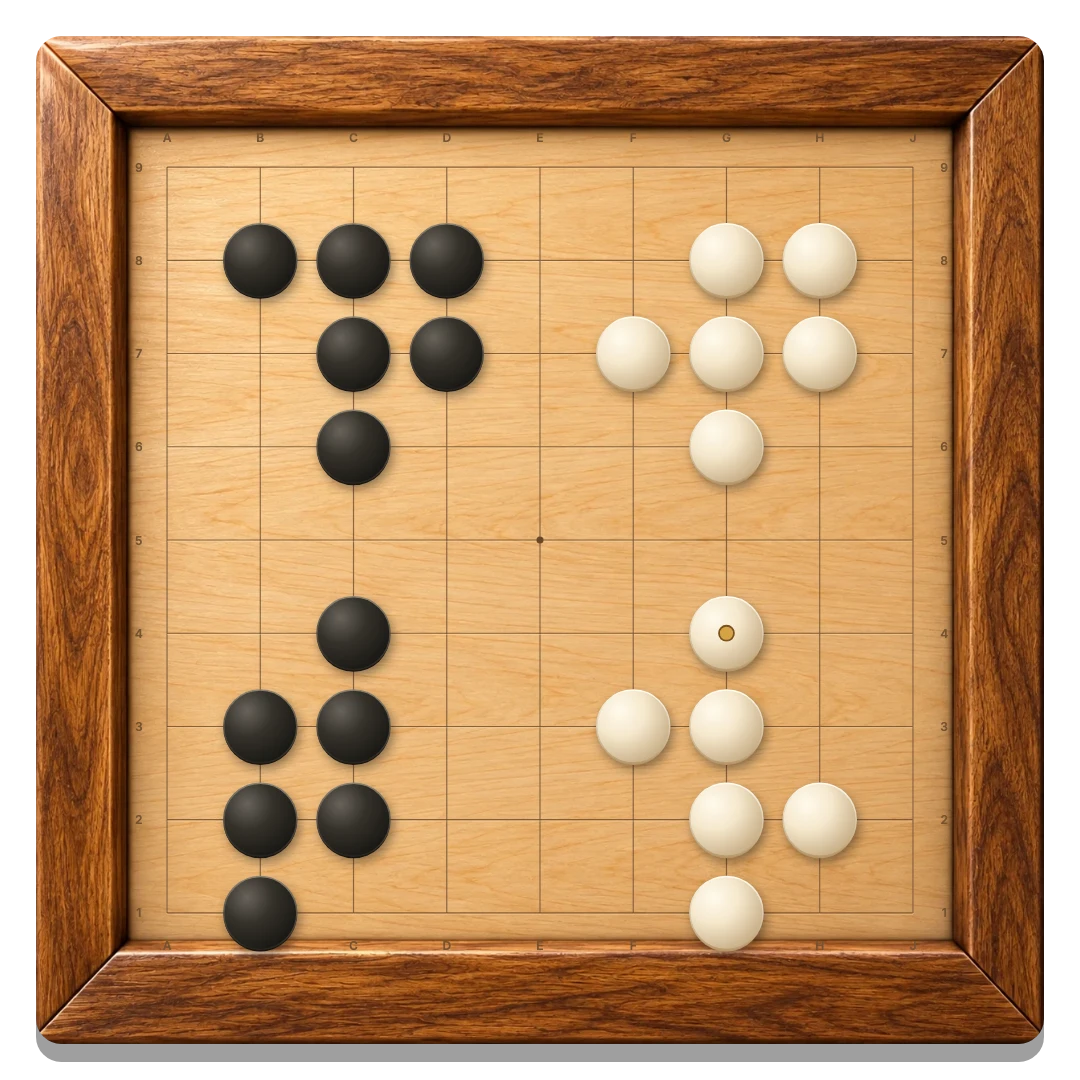
Share a private link with the friend you want to play.
Capture groups and surround territory at your own pace.
Review dead groups together after two passes.
Start a private Go game by link
- Choose your board. A first visit uses 9 × 9. To create a larger table, choose Same device, set 13 × 13 or 19 × 19 in the size menu, then select Play with a friend.
- Copy the invitation. Use Share invitation or Play with a friend in the game and send the link to your opponent.
- Take your seats. The host has Black and the first guest has White. Your own browser restores your existing seat.
- Stay connected. Black begins when both friends are present. White receives 7.5 komi.
A room keeps its board size. For a different size, return to Same device, choose the new size and create another invitation. There is no random matchmaking.
Play side by side with Go 2 Player, practise in Vs Computer or compare all modes in the online guide.
Go rules: give your groups room to breathe
Black starts. Take turns placing one stone on an empty intersection of a 9 × 9, 13 × 13 or 19 × 19 board. A group consists of stones of one color connected horizontally or vertically. Diagonal stones are separate.
An empty point next to a group is a liberty. Fill the last liberty of an enemy group to capture all its stones. Your own group must have at least one liberty after captures: suicide is forbidden. Positional superko forbids a placement that repeats any earlier board position; passes are exempt.
The aim is to control more area. Five stones in a row has no special meaning in Go. There is no move limit or clock.
Two passes, then a score you agree on
When neither player wants to place another stone, press Pass. Two consecutive passes open score review. Tap a dead group to fade its stones; tap it again to restore it. Small black and white squares show territory. Empty regions bordered by both colors, or neither, remain neutral.
Area scoring adds living stones and empty intersections bordered only by your color. White receives 7.5 extra points, called komi. Captured stones are displayed for reference and are not added to the total again. The higher score wins.
Both players must confirm the same score. Changing a dead-group selection clears both confirmations. If you disagree, either player can choose Resume play: the marked stones return, and the player whose turn follows the passes moves next. Play out the disputed capture, then pass again when ready.
Confirming your score leaves the review open until your friend agrees. Resign is available during the game, with a confirmation before the win is awarded to your opponent.
A comfortable board on any screen
Click or tap where two lines meet. The gold dot marks the most recent stone. Pinch to enlarge the board and drag to explore it; this helps with the 19 × 19 grid on a phone.
With the board focused, use arrow keys to select an intersection and Enter or Space to place a stone. Home returns to the center. During score review, the same controls mark or restore a group.
Keep your seat for the next move
The room saves confirmed actions before sharing them with both players. If the connection drops, the game reconnects and restores the board, including captures, passes and score review. Both friends must be connected before either can act.
Return with the same browser and invitation to recover your seat. Opening your seat in a new tab replaces the earlier connection. Clearing site data removes the saved seat token. Rooms expire after seven days of inactivity.
Once a guest has joined, New round needs both players’ agreement. The old board remains until the second player accepts. Another game action cancels a pending request. Rematches keep the board size and colors, with Black starting again.
Before you place the first stone
Can my friend use a different device?
Yes. Send the invitation to a phone, tablet or computer. Both browsers need to stay connected to play.
Who moves first?
The host plays Black and starts. The guest plays White and receives 7.5 komi. Colors stay the same for a rematch.
Which rules does this Go game use?
Area scoring with 7.5 komi for White, no suicide and positional superko. Two passes open a review where players agree on dead groups and the score. This is an even game without handicap stones.
Does five in a row win?
No. Go is about territory and living stones. Capturing can help you gain area, but making a line of five does not end the game.
Are dead stones removed automatically?
No. After two passes, tap groups to mark them dead. Both players confirm the score. If a group is disputed, resume play and resolve it on the board.
Can one player restart the board?
After the guest joins, both must agree to a new round. A move or scoring action cancels a pending request.
A small invitation to a bigger game.
Bring a friend and see where the first stone leads.
Invite a friend to Go ↗