
A FRIEND. A ROLL. A RACE HOME.
Play Backgammon
with a friend.
A warm wooden board for the two of you. Send a private invitation, choose your next move, and see whose fifteen checkers make it home first.
- One private linkYour chosen opponent
- Short backgammonClassic rules and setup
- Free to playNo account needed
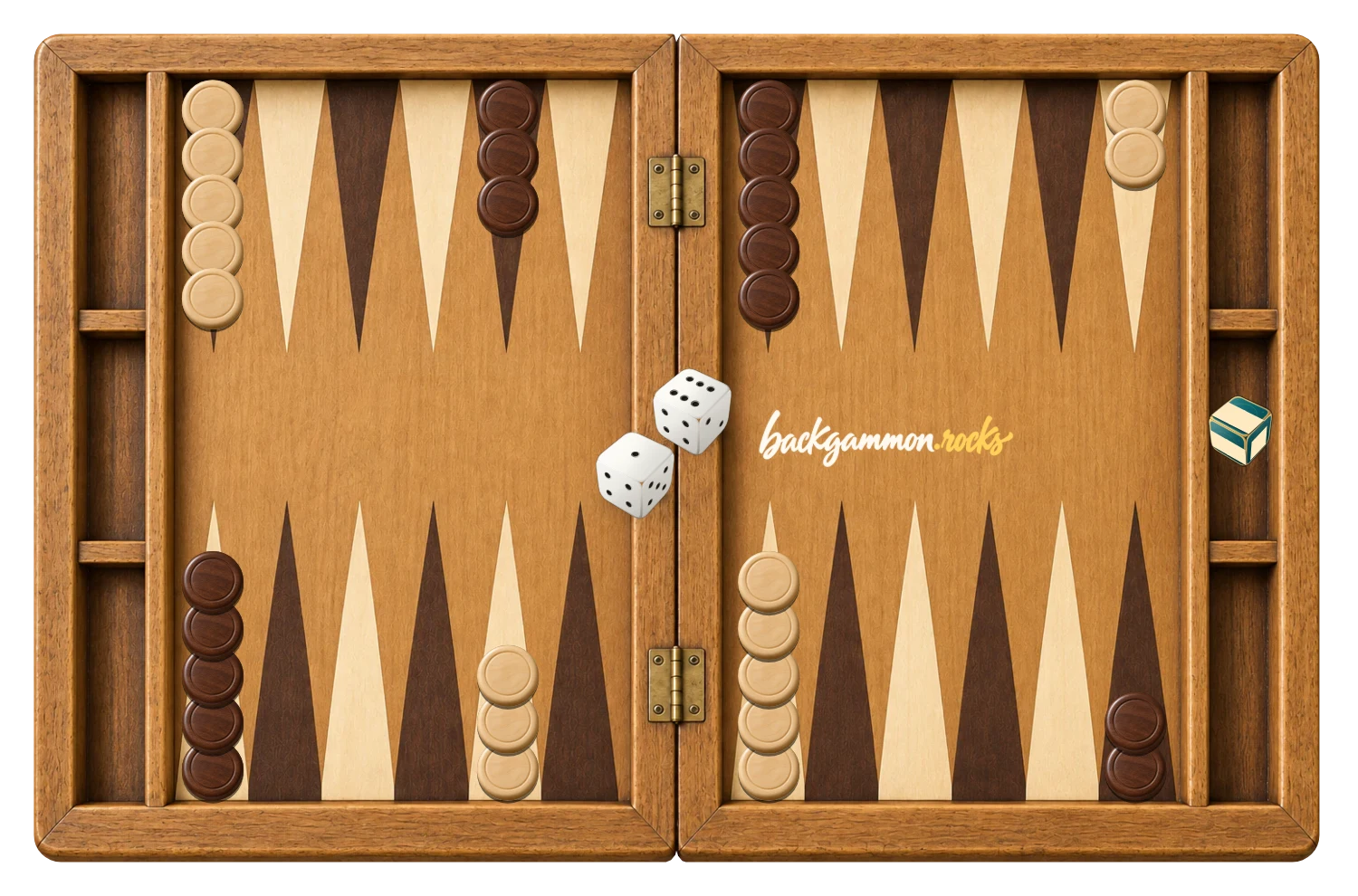
Create a room and send its invitation to your friend.
The higher opening die starts and uses both numbers.
Server-generated dice and checked moves keep both devices in step.
How to play backgammon with a friend by link
- Open a private table. Choose Invite a friend to create a room.
- Copy the link. Use Share invitation or Play with a friend in the game, then send the invitation yourself.
- Take the second seat. Your friend opens the link in their browser. The creator is White; the guest is Black.
- Roll together. The host presses Roll to start. The server rolls one die per player; the higher number decides who goes first.
Both players must stay connected. The guest sees the board turned towards their side; Game menu → Flip board changes the view. For one shared screen, open Backgammon 2 Player. For practice, try Backgammon vs Computer. The online guide compares all modes.
Short-backgammon rules: move fifteen checkers home
Each player begins with fifteen checkers in the classic short-backgammon arrangement: two on their 24-point, five on their 13-point, three on their 8-point and five on their 6-point. This is short backgammon with hits and bar entry, rather than long nardy.
White starts from the top-right point, travels across the top towards the left, then along the bottom towards the bottom-right home board. Black travels in the opposite direction and finishes in the top-right home. Each home has six points.
The opening roll
One die is rolled for White and one for Black. The higher die starts. That player uses both opening numbers. If the dice match, roll again; there are no opening doubles.
Use every playable number
Each die is a separate move. Move two different checkers, or one checker twice through a legal intermediate point. Later doubles provide four moves of the same number. You must use the maximum possible number of dice. When only one of two different dice can be played, the higher must be used if possible.
Select a glowing checker and then a marked destination. The hints include the compulsory continuation rules. Select the same checker again to cancel. Use a mouse or touchscreen to select your checker and destination.
Closed points, blots and the bar
A point with two or more opposing checkers is closed. A point with exactly one opposing checker is a blot. Landing there hits that checker and places it on the central bar.
If any of your checkers are on the bar, you must enter them into the opponent’s home before moving another checker. A die of one enters the first point, two the second, and so on. Closed entry points cannot be used. Once all barred checkers return, you can spend remaining dice on other legal moves.
Blocked roll: if no legal move remains, the game offers Pass turn. You cannot pass while a legal move is available. Unusable dice are then discarded and the opponent rolls.
Bearing off and winning the round
Bring all your remaining checkers into your own six-point home, with none on the bar, to begin bearing off. Select a checker and the highlighted side tray. An exact die removes a checker from its point. A larger die may remove the checker from the farthest occupied point only. If a checker is hit during bearing off, it must return from the bar and reach home again before you can resume removing checkers.
The first player to bear off all fifteen wins. A normal win is one point. If the loser has borne off none, the result is a gammon worth two points. If they also have a checker on the bar or in the winner’s home, it is a backgammon worth three. This is one independent round, without a doubling cube or cumulative match score.
Return to your seat and play another round
The server generates online dice, validates turns and saves accepted actions before confirming them. After a connection drops, the client reconnects and restores the saved board and remaining dice. Moves pause until both players are connected.
Reopen the invitation in the same browser to recover your seat. Opening that seat in a second tab replaces its earlier connection. Clearing site data removes your saved seat credential. Inactive rooms expire after seven days.
New round is a shared decision: both players must agree to reset an online table. The colors stay the same and a new opening roll decides the starter. Local and computer boards save separately from each other in your browser.
Before your first roll
Can I play with a specific friend?
Yes. Create a private table and share its invitation. The first guest takes the second seat. There is no random matchmaking.
Who rolls the opening dice online?
The room creator presses Roll to start. The server rolls one die for each side. The higher starts and uses both numbers; a tie is rolled again.
Can either player choose the dice?
No. Online rolls are generated by the server. Players choose their legal checker moves after receiving the roll.
Can my friend join from a phone?
Yes. Each person can use a phone, tablet or computer. Both need an internet connection during the online game.
Why is a move I expected unavailable?
Check whether a checker is on your bar, whether the destination is closed, or whether the move would prevent you from using the maximum number of dice. Bearing off also requires every checker to be home.
Is the doubling cube included?
No. This casual version plays single rounds with normal, gammon and backgammon results. It does not use a doubling cube, ratings or wagers.
Make the next roll a friendly one.
Your private table is ready for two.
Invite a friend to Backgammon ↗